Insurance

Terminology ...
Insurance is an arrangement whereby some firm or agency guarantees compensation in the case of some specified loss or damage that is possible in the future — not because of fault, but because of the agreement to do so, generally in exchange for a payment called a premium.
"[I]n the insurance context, coverage is defined as the '[i]nclusion of a risk under an insurance policy; the risks within the scope of an insurance policy.'"
Southern-Owners Ins. Co. v. Easdon Rhodes & Assocs. LLC, 872 F.3d 1161, 1165 (11th Cir. 2017) (quoting Black's Law Dictionary, 10th ed.)
Some key things you should know about insurance:
- endorsements
- incentives
- regulation
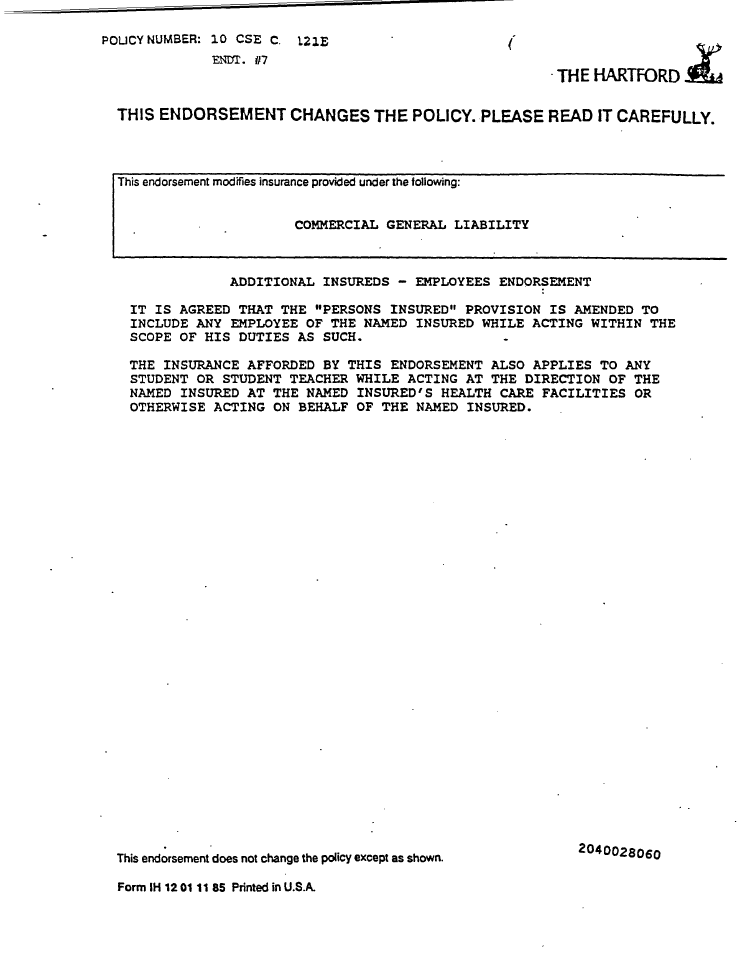
What is an endorsement?
“[T]he meaning of the word "endorsement" in the insurance context is well-known ... ‘a provision added to an insurance contract altering its scope or application[.]’”
Van Erden v. Sobczak, 271 Wis. 2d 163, 178 (Wis. App. 2004) (quoting Webster’s Third New International Dictionary)
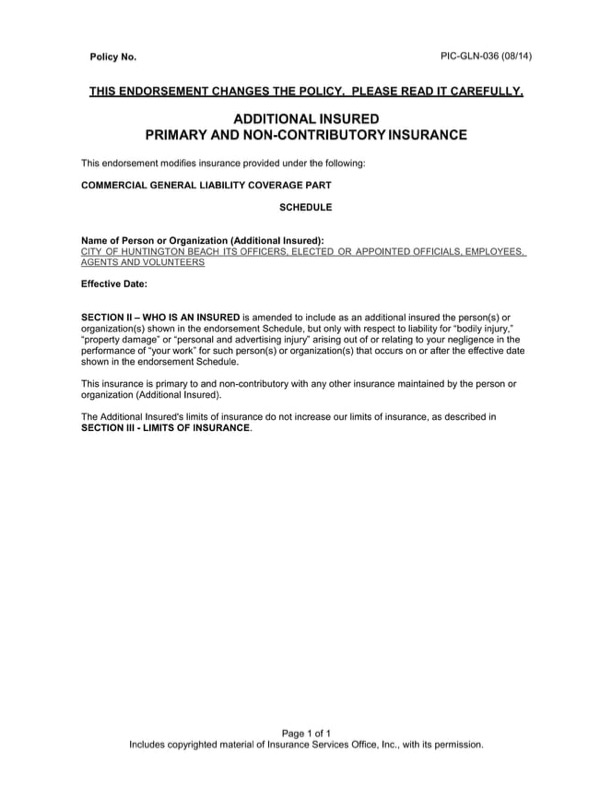
- An endorsement can provide that someone is an additional insured by naming them (e.g., “Cozy Nook Bookstore, Inc.”).
- An endorsement can also apply to a group of persons on a blanket basis (e.g., “all directors and officers of the corporation”).
Why care about endorsements?
- Contracts sometimes include an obligation to procure insurance from a third-party insurance company.
- This might be part of a tort-liability risk management strategy.
- For example, your client, a toy store, will only agree to sell a new toy if the manufacturer will put the toy store on its products liability insurance policy. As a result, the negotiated contract between the store and the manufacturer provides for this.
- Such a contractual obligation can be worthless if breached!
- Consider that if your client just wanted the contracting party to cover a loss, the contract could have just provided for that. The benefit of an insurance policy is that there’s a financially solvent third-party insurance company that can pay the claim.
- To protect the client’s interest in getting the benefit of insurance, you must verify the coverage from the insurance company. Get the endorsement and keep it on file.
About incentives …
- There is generally an asymmetry of incentives and bargaining power between insurance companies and consumers.
- Insurance companies often have the bargaining power to set the terms of the policy.
- Insurance companies can improve their bottom line by being clever about "fine print" in the insurance policy and by dragging their feet on paying claims.
- Insurance companies have the incentives to:
- sell more policies
- avoid paying claims
- Insurance customers have the incentives to:
- not buy insurance until they need it
- avoid seeming risky
- take less care when insured
- In other words, both sides have incentives to:
- hide what they know
- try to take the risk out of risk
About regulation …
- Insurance is heavily regulated at the state level – by state law and state agencies
- Regulation limits "fine print" subversions of the bargain by insurers
- Regulation may compel insurers to pay claims without litigation
- Regulation may force customers to purchase insurance in order to:
- Keep premiums affordable
- Example: the Affordable Care Act’s original individual mandate (later undone)
- Rationale: If only ultra-risky people buy insurance, premiums will be ultra high.
- Provide a source of payment for third parties
- Example: auto liability insurance
- Keep premiums affordable
Review Question
Review question:
Geno’s General Store agrees to sell maple syrup manufactured by Hexetron Breakfast Systems LLC. Hexetron’s sales contract with Geno’s obligates Hexetron to add Geno’s to its products liability policy with IIG Insurance Co.
Hexetron never follows through on this.
A house burns to the ground after a bottle of the maple syrup ignites after having been left on a kitchen counter where it was exposed to direct sunlight. As a result, Geno’s incurs a huge products liability judgment. And now Hexetron Breakfast Systems LLC is insolvent. Can Geno’s recover from IIG?
Answer:
No. Geno’s should have gotten the endorsement! Without IIG having included Geno’s as a covered entity, Geno’s is not insured and gets no benefit of insurance.